
Is School Out?
Do not miss this opportunity to educate the next generation!

It is safe to say that school is out for most children. Now, what does this mean for parents?
This is a golden opportunity to reevaluate the priorities in our own lives to make sure we are meeting God’s priorities in the children(s) lives given to us to govern. Deuteronomy 6:6-9“These words that I am giving you today are to be in your heart. 7 “Repeat them to your children. Talk about them when you sit in your house and when you walk along the road, when you lie down and when you get up. 8 “Bind them as a sign on your hand and let them be a symbol on your forehead. 9 “Write them on the doorposts of your house and on your city gates.” We must be active in witnessing and ministering to those children around us. We need to be showing them the truth of God’s Word so that they may take ownership of their own lives and seek after the Lord. We first do this by our own actions and living righteously. What Apostle did not first follow the Lord before calling others to? Before we can help any little one in our care, we must first take care to be in the loving arms of our Heavenly Father. This comes daily with being in His Word. When we do take on the responsibility of caring for a child, we need to minister utmost that they would set their hope in God and not forget the works of God, so they would keep His commandments. I would encourage you to take time and examine Psalm 78:1-8 and see how God wants us to share and be the examples to the next generation. It does not matter if the previous generation did not do this for you. It only matters that we step up to the plate and ask God to use us accordingly. Like Jeremiah, God will give the words to speak if we only listen and obey. Jeremiah 1:4-7 “The word of the LORD came to me: 5 I chose you before I formed you in the womb; I set you apart before you were born. I appointed you a prophet to the nations. 6 But I protested, “Oh no, Lord GOD! Look, I don’t know how to speak since I am only a youth.” 7 Then the LORD said to me: Do not say, “I am only a youth,” for you will go to everyone I send you to and speak whatever I tell you.”
We have no excuse; let 2026 be a summer break where we educate the next generation to stand firm in the Lord and have their foundation built on Jesus Christ.
Hold until relieved, our Blessed Hope is coming,
JL

Re-Post Friday
Do you need to have it all together for Jesus to care about you?
Does Jesus seek out the lost? Find out HERE!
Faithful Service and Christian Fellowship
Concluding our study into the book of Titus
“12. When I send Artemis to You, or Tychicus, be diligent to come to me at Nicopolis, for I have decided to spend the winter there. 13. Send Zenas the lawyer and Apollos on their journey with haste, that they may lack nothing. 14. And let our people also learn to maintain good works, to meet urgent needs, that they may not be unfruitful. 15. All who are with me greet you. Greet those who love us in the faith. Grace be with you all. Amen.
Titus 3:12-15 (NKJV)
As Paul concludes his letter to Titus, he turns from doctrine and Christian conduct to practical instructions concerning ministry, fellowship, and encouragement among believers. While Titus 3:12–15 may seem like simple closing remarks, these verses reveal the importance of faithful service, cooperation in ministry, and caring for the needs of fellow Christians. Paul reminds Titus that the work of the gospel is not accomplished alone but through believers working together for the glory of God.
“When I send Artemas to you, or Tychicus, be diligent to come to me at Nicopolis, for I have decided to spend the winter there”
Titus 3:12 (NKJV)
Paul begins with the phrase “be diligent,” which comes from the Greek word spoudazō (σπουδάζω), meaning “to make every effort,” “to be eager,” or “to act quickly.” Paul desired Titus to prioritize this meeting because Christian ministry requires cooperation and accountability among God’s servants. Throughout Scripture, we see that even great leaders like Paul depended upon faithful companions. Proverbs 27:17 teaches that “As iron sharpens iron, so a man sharpens the countenance of his friend.”
“13. Send Zenas the lawyer and Apollos on their journey with haste, that they may lack nothing.”
Titus 3:13 (NKJV)
In verse 13, Paul instructs Titus to send Zenas. This demonstrates the church’s responsibility to support those serving in ministry. The phrase “lack nothing” reflects the Christian duty of providing for the practical needs of fellow believers who are laboring for the gospel. Apollos was already known as a mighty teacher of God’s Word (Acts 18:24-28), yet even faithful servants needed encouragement and assistance from the church. This principle is echoed in Galatians 6:10, which says, “Therefore, as we have opportunity, let us do good to all, especially to those who are of the household of faith.”
“14. And let our people also learn to maintain good works, to meet urgent needs, that they may not be unfruitful.”
Titus 3:14 (NKJV)
Paul continues in verse 14, the Greek word for “maintain” is proistēmi (προΐστημι), which carries the idea of devoting oneself to, leading in, or being committed to something. Good works are not occasional acts of kindness, but a consistent lifestyle flowing from a transformed heart. The believer who has experienced God’s grace should naturally seek opportunities to help others. Jesus taught this same truth in Matthew 5:16: “Let your light so shine before men, that they may see your good works and glorify your Father in heaven.” Good works do not save us, but they demonstrate the reality of our faith and prevent spiritual unfruitfulness.
15. All who are with me greet you. Greet those who love us in the faith. Grace be with you all. Amen.
Titus 3:15 (NKJV)
Paul closes with greetings and a final blessing; the word “grace” comes from the Greek charis (χάρις), meaning God’s unmerited favor and blessing. It is fitting that Paul ends his letter with grace because grace is the foundation of everything he has taught throughout Titus. From salvation to sanctification and Christian service, every aspect of the believer’s life depends upon God’s grace. As Paul wrote in 1 Corinthians 15:10, “But by the grace of God I am what I am, and His grace toward me was not in vain; but I labored more abundantly than they all, yet not I, but the grace of God which was with me.”
In conclusion, Titus 3:12–15 reminds us that the Christian life is not meant to be lived in isolation. Believers are called to encourage one another, support those serving in ministry, meet urgent needs, and devote themselves to good works. Paul’s final words emphasize the importance of faithful fellowship and practical service within the body of Christ. When Christians work together in unity and depend upon God’s charis (grace), they become fruitful servants who bring glory to God and strengthen His church.
Stay the Course for the Kingdom,
Austin
Understanding the Twelve- Simon the Zealot
Understanding an overlooked disciple.
15 Matthew and Thomas; James the son of Alphaeus, and Simon called the Zealot;
Luke 6:15
We have come to our final two disciples. Even though these are the last two for us to discuss, that does not mean that they are any less or more greater than the ten other men that we have discussed. As we have seen, Jesus called the men to Him who would fulfill the role of sharing the gospel and growing the church, which includes our final two disciples. We have already seen two other disciples, whom we had to analyze based on what is not mentioned about them, and that includes the disciple today. With that said, let’s look at Simon the Zealot.
Based on what we have learned about the other disciples and what we don’t hear about Simon the Zealot, I believe we can infer a couple of things about him. He was not a hot-head wanting to call down fire like James and John, the Sons of Thunder. He didn’t question Jesus like Peter. He didn’t actively bring individuals to Jesus as Andrew did. However, this shows something about his character. Simon was there, soaking in the words of Jesus. There is no mention of him questioning Jesus because Simon believed Jesus at His word. There is no mention of Simon bringing individuals to Jesus because, I believe, he wanted to ensure that he understood what Jesus was calling them to do. Simon was preparing to be sent out to share the gospel and knew that he needed as much information as possible in order to complete his mission.
What we can use to learn more about him is the “Zealot” name attached to Simon. Now, you might first think of a Zealot in the sense of a devoted person willing to fight and kill for their blind faith. This usage of the word would actually come about after Simon’s day during the Jewish rebellion and the ultimate Roman dispersion of the Jewish people outside of Israel.
The word is defined as “to have a warmth of feeling for or against.” Most understand the word in the negative aspects, as we have previously discussed. I find it hard to believe that the negative implication of this word would have applied to Simon. Imagine Jesus, whose ministry was defined by “loving your neighbor,” calling Simon the Zealot to ministry if the word only meant “compassionately against” or other words, “hater.” In chapter one of Acts, we see Simon still has this as part of his name; if he were a hater who was transformed by Christ, his name would have changed, like Simon to Peter or Saul to Paul. Yet, we find the name continued to be Simon the Zealot, which implies that it was for the first aspect of the definition. Nevertheless, let’s look at what scripture says about the word “Zealot” and see why such a word had such a connection to Simon.
Our first glimpse is found in Acts 21:20 “When they heard it, they glorified God and said, “You see, brother, how many thousands of Jews there are who have believed, and they are all zealous for the law.” Jews who believed in Jesus as the Messiah were compassionate toward the law. They dug into the Old Testament teachings, seeking to better understand their Messiah. This is why Jesus said in Luke 24:44“Then He said to them, “These [are] the words which I spoke to you while I was still with you, that all things must be fulfilled which were written in the Law of Moses and [the] Prophets and [the] Psalms concerning Me.” They were identified as zealous, just like Simon was.
It is next used in a manner that appears to be negative at first glance. Acts 22:1-4“Brethren and fathers, hear my defense before you now.” 2 And when they heard that he spoke to them in the Hebrew language, they kept all the more silent. Then he said: 3 “I am indeed a Jew, born in Tarsus of Cilicia, but brought up in this city at the feet of Gamaliel, taught according to the strictness of our fathers’ law, and was zealous toward God as you all are today. 4 “I persecuted this Way to the death, binding and delivering into prisons both men and women.” Paul identifies their passion for the Lord. This passion was misplaced, but was passionate towards God. When man is passionate towards God but does not have God living in his or her life, he or she will be guided astray. Examine Galatians 1:14, Paul testifies to his own misplaced zeal. Simon was called the Zealot, and yet we see virtually nothing about him questioning Jesus or causing a scene, as some of the other disciples did. In fact, the lack of reporting would further express his desire to be with Jesus and to listen. Simon’s zealousness was, in fact, passionately focused on Christ and Christ alone.
Paul further helps us understand the word usage by applying it to believers who should want spiritual gifts from their Heavenly Father. 1 Corinthians 14:12 “Even so you, since you are zealous for spiritual [gifts,] [let it be] for the edification of the church [that] you seek to excel.” When we are zealous for the Lord, we will desire the things of God. A heart that is in tune with the Lord will ask God how they should act to follow through with the commandment of being holy. 1 Peter 1:16 “For the scriptures say, ‘you must be holy because I am holy.” Simon must have truly cared what Jesus intended for them to hear and desire.
Finally, Paul and Titus both help us understand that Simon was a predecessor for us to examine regarding being Zealots ourselves. Titus 2:14 “who gave Himself for us, that He might redeem us from every lawless deed and purify for Himself [His] own special people, zealous for good works.” And 1 Peter 3:13 “Who is there to harm you if you prove zealous for what is good?”
Simon the Zealot is one of the least discussed disciples. Yet, his title helps identify the true compassion and desire he had for Jesus Christ. This desire, without question, continued because Simon was identified as the “Zealot” after Jesus’ resurrection and ascension. Simon was a deeply motivated and compassionate scripture-seeking follower of God, who only wished to have the spiritual gifts to glorify God and share the good news of Jesus Christ. If only the Church had more Simons, willing to seek the Lord no matter what. If only the Church had more Simons with the desire to follow, know, and act according to what the Lord has provided.
Seek the truth and encourage one another,
Alex

A Study in Genesis
God can take care of two people at the same time.
We now come to a rather remarkable story of redemption.
Isaac has been born, and the Lord’s prophetic disclosure had come to pass. But now there are two sons, and in doing so, we see the beginning stage of what has plagued the world for centuries. However, before we get into this struggle, I want to quickly identify an issue the church fails to understand. When God says He will do something, no matter how small or impossible it might be, He will do it. He told Sarah and Abraham that within the year, they would have a boy. Genesis 18:10-15“The LORD said, “I will certainly come back to you in about a year’s time, and your wife Sarah will have a son! ” Now Sarah was listening at the entrance of the tent behind him. 11 Abraham and Sarah were old and getting on in years. Sarah had passed the age of childbearing. 12 So she laughed to herself: “After I am worn out and my lord is old, will I have delight? ” 13 But the LORD asked Abraham, “Why did Sarah laugh, saying, ‘Can I really have a baby when I’m old? ’ 14 “Is anything impossible for the LORD? At the appointed time I will come back to you, and in about a year she will have a son.” 15 Sarah denied it. “I did not laugh,” she said, because she was afraid. But he replied, “No, you did laugh.” Genesis 21:1-7“The LORD came to Sarah as he had said, and the LORD did for Sarah what he had promised. 2 Sarah became pregnant and bore a son to Abraham in his old age, at the appointed time God had told him. 3 Abraham named his son who was born to him -- the one Sarah bore to him -- Isaac. 4 When his son Isaac was eight days old, Abraham circumcised him, as God had commanded him. 5 Abraham was a hundred years old when his son Isaac was born to him. 6 Sarah said, “God has made me laugh, and everyone who hears will laugh with me.” 7 She also said, “Who would have told Abraham that Sarah would nurse children? Yet I have borne a son for him in his old age.”
When God says He will do something, we should take it seriously and go with it. He would be born of a virgin, in Bethlehem, from the bloodline of King David. These are all things He did. But why do we fail to recognize the second coming prophecies? He will come in the clouds and take the Church to go where He is, before the hour of trial that is to come on the whole earth. You do not have to believe in the Rapture to be saved, but to take all of God’s Word seriously, you do. I wonder how many Baptists, Reformers, Methodists, Catholics, Presbyterians, and others would act if they were around in Jesus first coming. I, for one, want to be expecting my Lord and doing the Work that He has for us. So when God says that Sarah would conceive and give birth to a son, God meant it.
Nevertheless, we now come to a stage in human history where two sides are wanting a blessing. This will set in motion rivalries, wars, and atrocities, all rooted in who would receive the promised blessing.
Take a moment and read verses 8 through 21. Here, we see that Ishmael and Isaac are at odds. Isaac is a little boy, and Ishmael is a lad. The scripture says, “And Sarah saw the son of Hagar the Egyptian, whom she had borne to Abraham, scoffing.” I, for one, had read over this several times and had never caught the magnitude of what was happening. Ishmael is scoffing; he believes the right to the promise should be his. Sarah, having learned her lesson and wanting to trust the Lord, now wants to protect the promise God had given. Some might say it is a motherly instinct, not faith in God, but I believe it can be both. We see that God agreed with Sarah when she went to Abraham and said kick them out. We see that God worked with Hagar and Ishmael and was with Ishmael through the days of his life. God blessed Ishmael, and to this day, his descendants are a great nation. But the promise of the salvation of mankind was to come through Abraham and Sarah, not anyone else. If you want to know more about the context behind Ishmael and Isaac’s original issue, I would encourage you to read Ken Johnson’s translation of the book of Jasher, where we learn that Ishmael, in fact, attempts to put action to his scoffing and tries to kill Isaac.
God protects both Isaac and Ishmael. Both have promises, both have destinies, and what we see today is only a carryover of the decisions made by those centuries before us.
In our own lives, are we living for the Lord in such a manner as to trust Him? Are we listening for the Lord? Or does He need to shout out of Heaven to get our attention? Let’s be about studying His Word so that we would be what Jesus said in John 10:16“And other sheep I have which are not of this fold; them also I must bring, and they will hear My voice; and there will be one flock [and] one shepherd.”
Hold until relieved, our Blessed Hope is coming,
JL

Re-Post Friday!
A deeper dive into this brief book!
A second review into the book of Jonah! Read it HERE!
Avoid Dissension Within the Church
What does God say about disputes within the church?
“9. But avoid foolish dispute, genealogies, contentions, and strivings about the law; for they are unprofitable and useless. 10. Reject a divisive man after the first and second admonition, 11. Knowing that such a person is warped and sinning, being self-condemned.”
Titus 3:9-11 (NKJV)
It is the goal of all Christians and believers in Jesus Christ to avoid strife within the bride of Christ. The question is, do we have division within the Church? Yes, we do. What does God say about these contentions that happen among Christians? Plain and simple, He abhors them. For example, we can also see God telling us to avoid foolish questions in 2 Timothy 2:23 (NKJV)
“But avoid foolish and ignorant disputes, knowing that they generate strife.”
These things always lead to division and turmoil. So, we must look at verse 10 and abide by the warning. We are not warned just once, but throughout Scripture. For example, God commands us to reject these types of people and worldly views in 2 John 1:10, 2 Timothy 3:5, 2 Thessalonians 3:6 & 14, Galatians 5:12. One piece of Scripture that stood out to me from Paul’s writings is Romans 16:17 (NKJV):
“17. Now I urge you, brethren, note those who cause divisions and offenses, contrary to the doctrine which you learned, and avoid them.”
In the end, in verse 11, God shows us two interesting things. First, through worldly living and sinning, we or the non-believer separate ourselves from God and become “self-condemned.” God does not force you to condemn yourself. This leads me to my next point: free will. God is showing us that we have the free will to choose Him or choose sin and self-condemnation. We have a choice to separate ourselves from God or to become a “bondservant” (Romans 1:1) and have eternal life with our Heavenly Father.
Stay the Course for the Kingdom,
Austin
Understanding the Twelve-Judas Iscariot
There is more to be seen about the man who betrayed Jesus.
“13 And He went up on the mountain and called to Him those He Himself wanted. And they came to Him. 14 Then He appointed twelve, that they might be with Him and that He might send them out to preach, 15 and to have power to heal sicknesses and to cast out demons: 16 Simon, to whom He gave the name Peter; 17 James the son of Zebedee and John the brother of James, to whom He gave the name Boanerges, that is, “Sons of Thunder”; 18 Andrew, Philip, Bartholomew, Matthew, Thomas, James the son of Alphaeus, Thaddaeus, Simon the Cananite; 19 and Judas Iscariot, who also betrayed Him. And they went into a house.”
Mark 3:13-19
It is only fitting that this week, we discuss the other Judas. The last two weeks, we had discussed two disciples about whom we had to infer more about them from their lack of being mentioned in scripture. That cannot be said for Judas Iscariot.
It is hard for many believers to accept the fact that the man who would betray Jesus actually walked with Him, was present for certain miracles, heard Jesus preaching, and saw Jesus fulfilling prophecy. You would think that with all that Judas was witness to, he would have known that he was walking with the Messiah. However, we get almost as many glimpses into Judas’s personality as we do Peter.
“4 But one of His disciples, Judas Iscariot, Simon’s son, who would betray Him, said, 5 “Why was this fragrant oil not sold for three hundred denarii and given to the poor?” 6 This he said, not that he cared for the poor, but because he was a thief, and had the money box; and he used to take what was put in it.”
John 12:4-6
Right after Jesus is anointed, Judas grumbles at the money that could have been made from the perfume. He comes off as caring for those who are poor, but through the Holy Spirit, the writers realise that Judas was stealing. We see here that he is cunning and charming to have fooled those around him. This obsession with money is carried over into Matthew 26:14-16 when Judas goes to the chief priests, asking what they will give him for betraying Jesus. This section of scripture also identifies that Judas, despite all that he had seen, did not believe that Jesus was the Messiah. Instead, Judas saw Him as more or less a “cash cow” or a way to make easy money while gaining respect in the community.
Earlier, I mentioned that Judas was cunning; in fact, I think he had the personality of most con artists, none of those closest to him suspected that he would betray Jesus. Look first at Matthew 26:19-25, “19 So the disciples did as Jesus had directed them; and they prepared the Passover. 20 When evening had come, He sat down with the twelve. 21 Now as they were eating, He said, “Assuredly, I say to you, one of you will betray Me.” 22 And they were exceedingly sorrowful, and each of them began to say to Him, “Lord, is it I?” 23 He answered and said, “He who dipped his hand with Me in the dish will betray Me.24 The Son of Man indeed goes just as it is written of Him, but woe to that man by whom the Son of Man is betrayed! It would have been good for that man if he had not been born.” 25 Then Judas, who was betraying Him, answered and said, “Rabbi, is it I?” He said to him, “You have said it.” When Jesus states that one of the twelve will betray Him, each disciple looks internally; they are all asking Jesus if they still have sin that would cause them to betray Him.
Secondly, we need to look at John 13:21-29, “21 When Jesus had said these things, He was troubled in spirit, and testified and said, “Most assuredly, I say to you, one of you will betray Me.” 22 Then the disciples looked at one another, perplexed about whom He spoke. 23 Nowthere was leaning on Jesus’ bosom one of His disciples, whom Jesus loved. 24 Simon Peter therefore motioned to him to ask who it was of whom He spoke. 25 Then, leaning back on Jesus’ breast, he said to Him, “Lord, who is it?” 26 Jesus answered, “It is he to whom I shall give a piece of bread when I have dipped it.” And having dipped the bread, He gave it to Judas Iscariot, the son of Simon. 27 Now after the piece of bread, Satan entered him. Then Jesus said to him, “What you do, do quickly.” 28 But no one at the table knew for what reason He said this to him. 29 For some thought, because Judas had the money box, that Jesus had said to him, “Buy those things we need for the feast,” or that he should give something to the poor.” Despite Jesus stating earlier that he would be betrayed by one of them, the other disciples still do not recognise that Jesus is identifying Judas as the betrayer. Instead, they believe that when Jesus tells Judas, “What you do, do quickly,” they believe that he is being sent on a task for Jesus. They did not make the connection that Jesus was releasing Judas to do what he was already planning.
Here, I want to put a stop to a growing idea behind Judas Iscariot. There are some who believe that Judas had no choice in his actions, that he was just a pawn used by God the Father to accomplish His will. This is a lie. Judas had as many chances as the other disciples, and more than some who came to recognise Jesus as the Messiah. And yet, he still chose to betray Him. Judas had the free will, as we all do, to make the choice. Follow God or not, he chose not to. Some might say, “Well, if Judas didn’t betray Jesus, then Jesus wouldn’t have gone to the cross for our sins”. In answer to this I want you to look at Esther 4:13-14, “13 And Mordecai told them to answer Esther: “Do not think in your heart that you will escape in the king’s palace any more than all the other Jews. 14 For if you remain completely silent at this time, relief and deliverance will arise for the Jews from another place, but you and your father’s house will perish.” While Mordecai is proclaiming that deliverance would come from another if Esther remained quiet, the meaning is the same. If Judas had accepted Jesus Christ as the Son of God, the Messiah, and the only One to reconcile mankind to God, then there would have came another who would betray Jesus. God’s will is always accomplished; who is used to accomplish it depends on the free will and the choices that each individual makes. Judas could have just as easily been known as a man of great faith instead of as the man who betrayed Jesus.
Today, believers need to pay attention to the lesson that Judas provides. First, it is frightening to realise that there are those who walk with Jesus, and yet they don’t actually know Him. Churches today are filled with those like Judas; they claim to follow Jesus but are as unsaved as the person who never steps foot into a church. It is why we as believers need to be on the alert; we need to call out sinful behaviour to either correct a born-again believer or to identify someone who is false. Secondly, while we cannot be saved based on our own actions, we have the free will to choose to accomplish God’s will or allow another to rise up to accomplish it. 2 Peter 3:9 states, “9 The Lord is not slack concerning His promise, as some count slackness, but is longsuffering toward us, not willing that any should perish but that all should come to repentance.” God did not wish for even Judas Iscariot to perish; however, due to his own choice not to follow God, Judas found his name not in the Lamb’s book of Life.
Seek the truth and encourage one another,
Alex

A Study in Genesis
Why waiting on the Lord can be a good thing.
Have you ever wanted something more than anything else and yet God appeared to be silent? In fact, there was no answer from Him at all? Abram and Sara undoubtedly felt like this for years. Then out of nowhere, God changes their names and promises a child to them. Nevertheless, the child would not come for some time. Chapter 21 of Genesis is the origin and the beginning stage of Isaac and the part he would play. Nevertheless, I want to take a moment and emphasize what many fail to see. They had to wait!
Waiting does not mean God does not care; in fact, it could mean He has something better for you and is waiting for you to give up on your silly idea for His. In my own life, I have seen God do this a few times. I really wanted something, and yet God said “No wait” just for me to later on realize what He was doing. Abram and Sara would become Abraham and Sarah, and the promise given to them came true. God provided Isaac.
Genesis 21:1-7“And the LORD visited Sarah as He had said, and the LORD did for Sarah as He had spoken. 2 For Sarah conceived and bore Abraham a son in his old age, at the set time of which God had spoken to him. 3 And Abraham called the name of his son who was born to him--whom Sarah bore to him--Isaac. 4 Then Abraham circumcised his son Isaac when he was eight days old, as God had commanded him. 5 Now Abraham was one hundred years old when his son Isaac was born to him. 6 And Sarah said, “God has made me laugh, [and] all who hear will laugh with me.” 7 She also said, “Who would have said to Abraham that Sarah would nurse children? For I have borne [him] a son in his old age.”
When God answers us, we should be careful to see His answer for all that it is. For instance, they wanted a child; God provided, but He also provided an answer to Sarah’s unbelief earlier. Look at Genesis 18:11-15“Now Abraham and Sarah were old, well advanced in age; [and] Sarah had passed the age of childbearing. 12 Therefore Sarah laughed within herself, saying, “After I have grown old, shall I have pleasure, my lord being old also?” 13 And the LORD said to Abraham, “Why did Sarah laugh, saying, ‘Shall I surely bear [a child,] since I am old?’ 14 “Is anything too hard for the LORD? At the appointed time I will return to you, according to the time of life, and Sarah shall have a son.” 15 But Sarah denied [it,] saying, “I did not laugh,” for she was afraid. And He said, “No, but you did laugh!” God reminds Sarah about what she did in Genesis 18 here in Genesis 21.
It is recorded that Sarah laughed twice. The first time, she laughed out of a lack of faith and a failure to see God’s capability to do anything. Luke 1:37“For with God nothing will be impossible.” Matthew 19:26 “But Jesus looked at [them] and said to them, “With men this is impossible, but with God all things are possible.” The second time, she is recorded laughing out of the joy of what God had done. Waiting on the Lord can do wonderful things for those who trust that the Lord will do what He says; it can build a perseverance that is supernatural and designed to inspire other believers around us. For those who fail to trust, they can inadvertently mock the Lord and not have the opportunity to encourage others through their example of trusting God. In the end, Abraham and Sarah trusted the Lord, and their actions of being faithful and waiting for the promise are something we should be eternally grateful for. For without Isaac, the promise of the coming Messiah would never come. Jesus, the Son of God, would come from the bloodline of Abraham and Sarah through Isaac. Next week, we will dive into the first dispute of who would receive Abraham’s blessing from the Lord.
Hold until relieved, our Blessed Hope is coming,
JL

Trained by Saving Grace
Let’s talk about Grace!
Last week we discussed how believers are to live soberly, righteously, and in a way that reflects sound doctrine before a lost world. Paul instructed Titus to teach different groups within the church, older men, older women, young women, young men, and bondservants—how to live lives that honor Christ. These teachings were especially important in Crete because the culture surrounding the believers was filled with corruption and ungodliness. As for this week, we will look at the foundation for why Christians are called to live differently. Paul now shifts the focus to the grace of God, showing that salvation not only rescues believers from sin, but also teaches and transforms them while they await the return of Jesus Christ.
“11 For the grace of God that brings salvation has appeared to all men, 12 teaching us that, denying ungodliness and worldly lusts, we should live soberly, righteously, and godly in the present age, 13 looking for the blessed hope and glorious appearing of our great God and Savior Jesus Christ, 14 who gave Himself for us, that He might redeem us from every lawless deed and purify for Himself His own special people, zealous for good works. 15 Speak these things, exhort, and rebuke with all authority. Let no one despise you.”
Titus 2:11–15 (NKJV)
In Titus 2:11–15, Paul explains that the Christian life begins and continues through the grace of God. He says that “the grace of God that brings salvation has appeared to all men,” pointing directly to Jesus Christ and His coming into the world. The Greek word for grace is χάρις (charis), meaning unearned favor, kindness, or a gift given freely by God. Salvation is not earned by works or human effort, but is offered through Christ alone. Paul emphasizes that this grace has “appeared,” meaning God revealed His salvation through Jesus so that all people would have the opportunity to repent and believe. This shows the heart of God toward humanity and His desire for people everywhere to come to salvation.
“8 But God demonstrates His own love toward us, in that while we were still sinners, Christ died for us.”
Romans 5:8 (NKJV)
“9 The Lord is not slack concerning His promise, as some count slackness, but is longsuffering toward us, not willing that any should perish but that all should come to repentance.”
2 Peter 3:9 (NKJV)
Paul then explains that grace is not only what saves believers, but also what teaches believers how to live. Titus 2:12 says that grace teaches us to deny “ungodliness and worldly lusts” and to live “soberly, righteously, and godly in the present age.” The Greek word for “teaching” is παιδεύω (paideuō), meaning to train, discipline, or instruct like a parent teaches a child. God’s grace changes the heart and leads believers away from sinful living. The word “ungodliness” comes from the Greek word ἀσέβεια (asebeia), meaning irreverence toward God or wickedness. Christians are called to reject the sinful desires of the world and instead pursue lives marked by self-control, righteousness, and holiness. Paul reminds Titus that believers must live this way “in the present age,” meaning right now, even while living in a sinful world. This demonstrates that salvation should produce visible transformation in the life of a Christian.
“1 I beseech you therefore, brethren, by the mercies of God, that you present your bodies a living sacrifice, holy, acceptable to God, which is your reasonable service. 2 And do not be conformed to this world, but be transformed by the renewing of your mind.”
Romans 12:1–2 (NKJV)
“15 Do not love the world or the things in the world. If anyone loves the world, the love of the Father is not in him.”
1 John 2:15 (NKJV)
Paul continues by pointing believers toward the future hope found in Jesus Christ. Titus 2:13 says believers are to be “looking for the blessed hope and glorious appearing of our great God and Savior Jesus Christ.” The phrase “blessed hope” comes from the Greek words μακαρία ἐλπίς (makaria elpis), meaning a joyful and confident expectation. Christians are not only saved from sin, but they are also waiting for the return of Christ. The word “appearing” comes from the Greek word ἐπιφάνεια (epiphaneia), meaning a visible manifestation or glorious appearing. This future hope motivates believers to remain faithful and continue living holy lives while waiting for Christ’s return. Paul reminds Titus that the Christian life is lived with eternity in mind.
“1 Let not your heart be troubled; you believe in God, believe also in Me. 2 In My Father’s house are many mansions; if it were not so, I would have told you. I go to prepare a place for you. 3 I will come again and receive you to Myself; that where I am, there you may be also.”
John 14:1–3 (NKJV)
“20 For our citizenship is in heaven, from which we also eagerly wait for the Savior, the Lord Jesus Christ.”
Philippians 3:20 (NKJV)
In verse 14, Paul explains the purpose behind Christ’s sacrifice. Jesus “gave Himself for us, that He might redeem us from every lawless deed and purify for Himself His own special people, zealous for good works.” The Greek word for “redeem” is λυτρόω (lytroō), meaning to release or ransom by payment. Through His death on the cross, Jesus paid the price for sin and freed believers from the bondage of sin. Paul also says Christ came to “purify” a people for Himself. The Greek word καθαρίζω (katharizō) means to cleanse or make pure. Believers are not only forgiven, but they are spiritually cleansed and set apart for God’s purposes. The phrase “special people” comes from the Greek word περιούσιος (periousios), meaning a treasured possession belonging to God. Christians are saved to live for God and to be “zealous for good works,” showing their faith through obedience and service.
“24 Who Himself bore our sins in His own body on the tree, that we, having died to sins, might live for righteousness—by whose stripes you were healed.”
1 Peter 2:24 (NKJV)
Titus 2:15 serves as a final charge from Paul to Titus, emphasizing the seriousness and authority of his ministry. Paul instructs him to “speak these things, exhort, and rebuke with all authority,” meaning Titus was not to be passive or uncertain when teaching God’s Word, but bold, clear, and faithful in delivering truth. The Greek word for “exhort,” parakaleō (παρακαλέω), carries the idea of encouraging and urging believers toward obedience, while “rebuke,” elenchō (ἐλέγχω), means to correct, expose, or bring conviction to sin and false teaching. This balance shows that true biblical leadership involves both encouragement and correction, always rooted in God’s truth and love. Paul also tells Titus, “Let no one despise you,” meaning he was not to allow others to dismiss or undermine his authority, because his authority was not personal but given by God through the message he carried. In the same way, this verse reminds believers today that God’s Word must be taught with confidence and integrity, regardless of opposition, because truth does not change based on culture or opinion.
Altogether, Titus 2:11–15 reveals that the grace of God is not only the foundation of salvation, but also the power that transforms the life of every believer. Paul reminds Titus that Christians are called to deny ungodliness, live righteously, and remain faithful while waiting for the glorious return of Jesus Christ. In the midst of a corrupt culture like Crete, believers were to stand apart as people who reflected holiness, truth, and obedience to God. Through Christ’s sacrifice, believers have been redeemed, purified, and made into God’s own special people, called to be zealous for good works and faithful to sound doctrine. Just as Titus was instructed to boldly teach and exhort these truths with authority, Christians today must also remain steadfast in God’s Word and live as examples to a world in desperate need of the grace and truth found only in Jesus Christ.
Stay the course for the Kingdom,
Austin
Understanding the Twelve- Judas, Son of James
Who is Judas the Son of James?
“13 And when it was day, He called His disciples to Himself; and from them He chose twelve whom He also named apostles: 14 Simon, whom He also named Peter, and Andrew his brother; James and John; Philip and Bartholomew; 15 Matthew and Thomas; James the son of Alphaeus, and Simon called the Zealot; 16 Judas the son of James, and Judas Iscariot who also became a traitor.”
Luke 6:13-16
We are reaching the end of our study on the twelve disciples. In fact, we only have four more men to discuss. In this study, we have seen a variety of personalities of the men that Jesus called to walk closely with Him. However, just as with James the Less, the man we will discuss today does not have a list of verses that we can pull from. With that said, let us take a look at Judas, the Son of James.
First things first, this is not the Judas who would ultimately betray Jesus Christ, a fact that when the list of the twelve disciples is given in Luke 6, we are given the name of Judas’s father to distinguish this Judas from Iscariot. Apart from being listed as one of the twelve, there is only one other verse that gives Judas, the son of James, credit, and we will look at this verse later on. We can tell a great deal amount about him based on him not being listed in some Bible verses. For instance First, he was not hot-headed like the Sons of Thunder. He didn’t try to prevent Jesus from fulfilling the task that God the Father sent Him for, unlike Peter. Nor did he actively bring individuals to Jesus like Andrew.
However, what separates Judas from James the Less is one question. “19 “A little while longer and the world will see Me no more, but you will see Me. Because I live, you will live also. 20 At that day you will know that I am in My Father, and you in Me, and I in you. 21 He who has My commandments and keeps them, it is he who loves Me. And he who loves Me will be loved by My Father, and I will love him and manifest Myself to him.” 22 Judas (not Iscariot) said to Him, “Lord, how is it that You will manifest Yourself to us, and not to the world?” 23 Jesus answered and said to him, “If anyone loves Me, he will keep My word; and My Father will love him, and We will come to him and make Our home with him. 24 He who does not love Me does not keep My words; and the word which you hear is not Mine but the Father’s who sent Me.” John 14:19-24
In this passage, Jesus is telling the disciples that soon He will no longer be physically with them, to which Judas asks why Jesus will show (manifest) Himself to them but not the world. Today, I am not going to get into a discussion regarding the meaning behind John 14:19-24, but I would encourage you to look at 1 Thessalonians 3:12-13 to see the Christian’s calling and their reward. However, from this question, we can see that Judas did not fully understand Jesus’s mission (which fits with scripture that states that after the resurrection, Jesus opened their minds, Luke 24:45). We can also infer from this that Judas was confident in his relationship with Jesus to be comfortable asking questions. While he did not fully understand, he had no fear that Jesus would say that his question wasn’t worth answering.
Early Christian tradition holds that Judas, son of James, preached the Gospel in various regions after the resurrection of Christ. Some accounts suggest his ministry was in areas such as Mesopotamia, Syria, or Armenia. What he represents for believers today is that we are free to come before Jesus to ask our questions. Jesus wants us near to Him, we do not need to be afraid of Jesus not answering us.
Seek the truth and encourage one another,
Alex

A Time As This
Why is no one talking about this?

Dear brothers and sisters, today I write to you regarding something that has been troubling my heart and I believe it is time I voice my concern. While you will not read this message until Monday the 18th, I am writing this on Thursday the 14th. 78 years ago to the day, Israel fullfilled the prophecy of being a nation again. As foretold they became a nation in one day.
Isaiah 66:8“Who has heard such a thing? Who has seen such things? Shall the earth be made to give birth in one day? [Or] shall a nation be born at once? For as soon as Zion was in labor, She gave birth to her children.” Prior to May 14, 1948 many Bible scholars who did not take God’s Word seriously failed to recognize this prophecy for what it was and thought Israel would never be a nation again. Today, many so called Bible scholars, theologians, pastors, and lecturers stand at pulpits and expound in colorful words, and yet fail to recognize the declaration of God. The clock is ticking, and the end of the age is close at hand, we who are wise enough to see the lateness of the hour need to step up and do what the scholars, theologians, pastors, and lecturers are not doing, we need to declare God’s Word! God did not give us signs of the times for us to bury our head and not share the good news of Jesus to all. He is more than just salvation, He is the Church’s salvation off this planet when the hour of trouble comes. Jesus makes the promise of the Rapture and the timing. John 14:1-3“Let not your heart be troubled; you believe in God, believe also in Me. 2 “In My Father’s house are many mansions; if [it were] not [so,] I would have told you. I go to prepare a place for you. 3 “And if I go and prepare a place for you, I will come again and receive you to Myself; that where I am, [there] you may be also.”Revelation 3:10 “Because you have kept My command to persevere, I also will keep you from the hour of trial which shall come upon the whole world, to test those who dwell on the earth.Nevertheless, many are.”
Nevertheless, many fail to take seriously and have hope in Jesus’ promise to the Church. If He is willing to keep His promises to the Jewish nation then why not the Church? He has not changed, Malachi 3:6“For I [am] the LORD, I do not change; Therefore you are not consumed, O sons of Jacob.” And Hebrews 13:8“Jesus Christ [is] the same yesterday, today, and forever.” He must uphold His name. So as the pulpits are silent, and the scholars podcast and write their colorful words discussing the latest fad of the religious world, we who are truly seeking the Lord can take heart in knowing that Jesus meant every word that is for Israel and He means every word that is for us! What a relief, now let’s go out and declare God’s Word and use Israel as the sign to the nations that there is a God in Heaven and He loves you and I. Let’s do what Paul wrote to Titus to do and be eagerly and joyfully about it until we are called home. Titus 2:11-15“For the grace of God that brings salvation has appeared to all men, 12 teaching us that, denying ungodliness and worldly lusts, we should live soberly, righteously, and godly in the present age, 13 looking for the blessed hope and glorious appearing of our great God and Savior Jesus Christ, 14 who gave Himself for us, that He might redeem us from every lawless deed and purify for Himself [His] own special people, zealous for good works. 15 Speak these things, exhort, and rebuke with all authority. Let no one despise you.
Hold until relieved, our Blessed Hope is coming,
JL

Re-Post Friday!
A look back into the book of Jonah!
A look back at our Basics series! Read it HERE!

Nothing Is Minor
Let’s finish our mini series on how nothing in the Bible is minor.

We now come to a rather remarkable conclusion to our mini series on how nothing in the Bible is minor. We need to take everything seriously if we are to be true followers of Christ. Personally, this started years ago when God revealed to me Proverbs 25:2 “[It is] the glory of God to conceal a matter, But the glory of kings [is] to search out a matter.” God placed on my heart the burning desire to look for the small hidden things that He had placed in His Word and in His creation. Since that time, it has been an adventure that I cherish daily. I want to help encourage you to see this principle as well. Last week, I said we would dig into the Seven Spirits of God and I plan to show you how a minor aspect by some is a rather remarkable declaration of God.
If you are reading the Bible for the first time, sooner or later you need to read Revelation. This will do two things, first it will allow you the opportunity to see how God wins! This world is awful and we need to be reminded how in the end God wins and evil loses. Second, if you are not a student of the Old Testament, Revelation will not make sense. However, you should read it. After that, go study the rest of the Bible and as you come across the answers to the questions in Revelation, you will have a solid understanding of the final chapters of history and God’s glory.
In chapter one we see the “Seven Spirits” who are before God. Now many will try to take this out of context or will just keep reading and ignore the treasure waiting here. To better understand, let’s examine it for what it is. First read Isaiah 11:2 “The Spirit of the LORD shall rest upon Him, The Spirit of wisdom and understanding, The Spirit of counsel and might, The Spirit of knowledge and of the fear of the LORD.”
Part of this was discussed last week, and I will not go into further details, but will tell you to read last weeks post. However, we can directly connect all seven characteristics of the spirit of God stated in Revelation 1:4 “John, to the seven churches which are in Asia: Grace to you and peace from Him who is and who was and who is to come, and from the seven Spirits who are before His throne,” to Isaiah 11:2. We further can see the Seven Spirits talked about in the following verses.
Revelation 3:1 “And to the angel of the church in Sardis write, ‘These things says He who has the seven Spirits of God and the seven stars: “I know your works, that you have a name that you are alive, but you are dead.”
Revelation 4:5 “And from the throne proceeded lightnings, thunderings, and voices. Seven lamps of fire [were] burning before the throne, which are the seven Spirits of God.” Based on this, we can take Revelation 1:13 “and in the midst of the seven lampstands [One] like the Son of Man, clothed with a garment down to the feet and girded about the chest with a golden band.”
Revelation 5:6 “And I looked, and behold, in the midst of the throne and of the four living creatures, and in the midst of the elders, stood a Lamb as though it had been slain, having seven horns and seven eyes, which are the seven Spirits of God sent out into all the earth.”
Based on these verses alone, without going into further details we can infer a rather remarkable amount about Jesus. We can see that the Seven Spirits are before the throne of God. We can tell that God has the seven Spirits which are also within the Church, and Jesus is within the Spirits and the Church. Finally, we can tell the seven spirits of God are part of Jesus.
This is only a brief examination of the seven Spirits of God. However, it is already revealing a treasure for us. We can tell that the Church has at its disposal the Spirit of the Lord; wisdom, understanding, counsel, might, knowledge, and the fear of the Lord. Each of these require their own study and yet, when we take God’s Word seriously, we can see a pattern of God wanting to show us something rather remarkable and all we have to do is follow Him.
At Mill House Ministries, we would love to learn what God is teaching you. Contact us and tell us about the treasure you are finding with the Lord and how He is working in your life!

A Study in Genesis
When we act in fear, we fail to act correctly.
Has there ever been a time in your life when you have acted out of fear? That you did what you did not want to do, but did it anyway, because of the unknown? Plain and simple, fear can make us act irrationally. Nevertheless, God can lead us through this fear and the uncertainty if we are willing to trust Him. Today, we are going to examine a time when Abraham and Sarah acted out of fear, and yet God acted according to His good nature and saved them. Genesis 20 immediately precedes the destruction of Sodom and Gomorrah. Abraham and Sarah go south towards Gerar, and while there, out of fear for his life, they claim they are not married but rather siblings. While there, Abimelech, the King, saw Sarah and took her with the intention of making her his wife. Instead of trusting the Lord, they acted out of fear.
Nevertheless, God will act according to His good nature. No matter what, He is dependable, no matter what, He can be trusted to do what is right, even when we fail. Malachi 3:6 “For I am the Lord, I do not change; Therefore you are not consumed, O sons of Jacob.” This does not take us out of the discussion of action but rather allows us to see that God is with us and has provided the necessary tools so that we do not act in fear. Proverbs 2:11“Discretion will preserve you; Understanding will keep you.” Abraham and Sarah’s actions had brought about the situation in which God would have to directly act.
Genesis 20:3-7 “But God came to Abimelech in a dream by night, and said to him, “Indeed you [are] a dead man because of the woman whom you have taken, for she [is] a man’s wife.” 4 But Abimelech had not come near her; and he said, “Lord, will You slay a righteous nation also? 5 “Did he not say to me, ‘She [is] my sister’? And she, even she herself said, ‘He [is] my brother.’ In the integrity of my heart and innocence of my hands I have done this.” 6 And God said to him in a dream, “Yes, I know that you did this in the integrity of your heart. For I also withheld you from sinning against Me; therefore I did not let you touch her. 7 “Now therefore, restore the man’s wife; for he [is] a prophet, and he will pray for you and you shall live. But if you do not restore [her,] know that you shall surely die, you and all who [are] yours.”
Without Abraham or Sarah knowing, God was already acting. While both of them were in fear, God was protecting. The event ends with Sarah being restored to Abraham, and King Abimelech giving gifts to Abraham. Abraham prays to God, and God heals Abimelech’s household. God provides for both sides. Fear had no place in Abraham’s life, and yet it was given the ability to sway Abraham and Sarah to make illogical choices. When we fail to lean on the Lord, we fail to be at our most courageous; when we seek our own understanding, we fail to see the truth standing in front of us. Next week, we will see how God is faithful even when we fail. Next week, we will see how God provides a son to Abraham and Sarah!
Hold until relieved, our Blessed Hope is coming
JL

Re-Post Friday!
A reminder that God is for everyone!

How to be a woman for Christ? Find out HERE!
Qualities of A Sound Church
How are your actions with fellow believers?
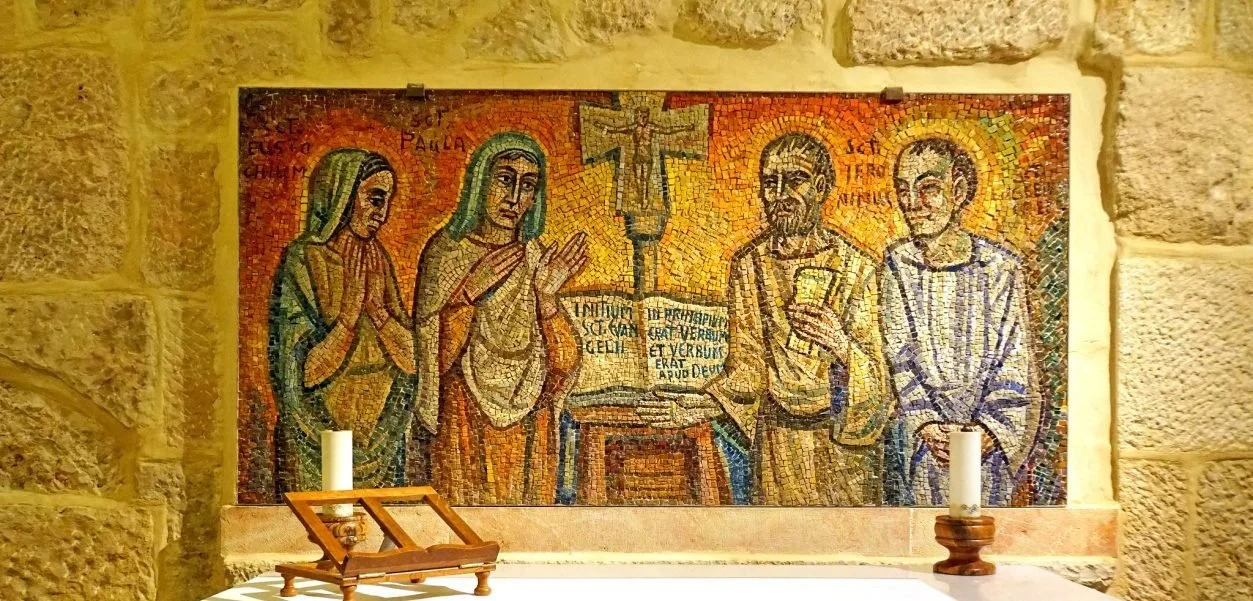
In our last study through Titus 1:10-15, Paul warned Titus about false teachers who were deceiving people and leading believers away from the truth. Though they claimed to know God, their actions revealed sinful hearts and corrupt doctrine. Paul instructed Titus to rebuke them sharply so the church would remain sound in the faith. As chapter 2 begins, Paul shifts from exposing false living to teaching what godly living should look like in the lives of believers.
“1. But as for you, speak the things which are proper for sound doctrine.”
Titus 2:1 NKJV
Paul begins by reminding Titus that truth must be taught boldly and correctly. The word “sound” means healthy or pure. Biblical doctrine produces spiritual maturity and holy living. This connects with 2 Timothy 3:16-17 NKJV, which says, “16. All Scripture is given by inspiration of God, and is profitable for doctrine, for reproof, for correction, for instruction in righteousness, 17. that the man of God may be complete, thoroughly equipped for every good work.” God’s Word is meant to shape every area of life. Christians are not called to follow the culture, but to follow the truth of Scripture.
“2. that the older men be sober, reverent, temperate, sound in faith, in love, in patience:”
Titus 2:2 NKJV
Paul first addresses older men in verse 2, saying they are to be “temperate, reverent, sober-minded, sound in faith, in love, in patience.” Older men were to be examples of spiritual maturity and steadiness. Their lives should display wisdom, self-control, and endurance. Proverbs 20:29 NKJV says, “29. The glory of young men is their strength, And the splendor of old men is their gray head.” showing that age should bring wisdom and godly character. Older believers are called to guide younger generations by their example and testimony.
“3. the older women likewise, that they be reverent in behavior, not slanderers, not given to much wine, teachers of good things—4. that they admonish the young women to love their husbands, to love their children, 5. to be discreet, chaste, homemakers, good, obedient to their own husbands, that the word of God may not be blasphemed.”
Titus 2:3-5 NKJV
Next, Paul speaks to older women in verses 3-5. They are to live reverently, avoid gossip and addiction, and teach what is good. Older women were to mentor younger women in loving their husbands and children, being pure, kind, and devoted to their homes. This teaching emphasizes the importance of discipleship within the church. Mature believers are responsible for encouraging and teaching younger Christians. Proverbs 31 gives a picture of a virtuous woman whose life honors God through faithfulness, wisdom, and diligence. Paul explains that godly behavior is important “that the word of God may not be blasphemed” (Titus 2:5). When Christians live contrary to God’s Word, it damages the testimony of the Gospel before the world.
“6. Likewise, exhort the young men to be sober-minded, 7. in all things showing yourself to be a pattern of good works; in doctrine showing integrity, reverence, incorruptibility, 8. sound speech that cannot be condemned, that one who is an opponent may be ashamed, having nothing evil to say of you.”
Titus 2:6-8 NKJV
In verses 6-8, Paul instructs younger men to be sober-minded and self-controlled. Titus himself was to be an example through good works, integrity, reverence, and pure speech. Paul teaches that leadership is not only about words, but also about example. 1 Timothy 4:12 NKJV echoes this truth: “Be an example to the believers in word, in conduct, in love, in spirit, in faith, in purity.” A godly example strengthens the church and silences criticism from unbelievers. Paul says that opponents would “have nothing evil to say” when believers walk uprightly.
“9. Exhort bondservants to be obedient to their own masters, to be well pleasing in all things, not answering back, 10. not pilfering, but showing all good fidelity, that they may adorn the doctrine of God our Savior in all things.”
Titus 2:9-10 NKJV
Finally, Paul addresses bondservants in verses 9-10, teaching them to be obedient, trustworthy, and respectful. Even servants were called to honor God through their work ethic and attitude. Paul explains that faithful living “adorns the doctrine of God our Savior in all things.” This means believers make the Gospel attractive when they live with integrity and faithfulness. Colossians 3:23 NKJV says, “And whatever you do, do it heartily, as to the Lord and not to men.” Every task and responsibility can become an act of worship when done for God’s glory.
Titus 2:1-10teaches that the Gospel changes how people live. Christianity is not simply about knowledge, but about transformation. Each believer, regardless of age or position, has a role in displaying Christ through godly conduct. The church is strongest when older believers disciple younger believers, when leaders live by example, and when Christians reflect Christ in everyday life. Through sound doctrine and holy living, the church becomes a witness to the world of God’s saving grace and transforming power.
Stay the course for the Kingdom
-Austin

Nothing is Minor
The five principles of the mouth and its significance.

When studying God’s Word, we need to recognize that the minor details are, in fact treasure. Today, I want to share one such treasure that I am still personally processing. As Christians, we have the inherent Spirit of God within us. This means that while our flesh is still sinful, our Spirit is alive, and there is a battle for control. The war was won on the cross, but the daily struggle continues until our salvation at the Rapture, or until the Lord calls us home. This daily battle is best fought when we dig into God’s Word and examine all things, including the minor aspects. I would argue that when we study God’s Word and come across the minor aspects, we indeed might stumble upon a treasure. Today I want to share with you a treasure I recently uncovered. I am calling it, The Five Principles of the Mouth.
Let’s dive right in and start. Please go to Psalm chapter 40, where we will see something rather remarkable.
Psalm 40:9-10“I have proclaimed the good news of righteousness In the great assembly; Indeed, I do not restrain my lips, O LORD, You Yourself know. 10 I have not hidden Your righteousness within my heart; I have declared Your faithfulness and Your salvation; I have not concealed Your lovingkindness and Your truth From the great assembly.”
We see five principles that the mouth is designed to do. Let’s break these down. We have “proclaimed,” “do not restrain,” “not hidden,” “declared,” and finally, “not concealed.” These five principles provide a baseline that all believers in the Messiah should know and understand. I would encourage you to dig deeper into each of these words and see the richness here.
The word “proclaimed” in Hebrew means “to bear news, bear tidings, publish, preach, and show forth.”
The word “not restrain” means the opposite of the Hebrew word. “This means to not to restrict, or withold or shut up or keep back, or forbid.”
The word “not hidden” means in Hebrew, “to not cover, coneal or hide.”
The word “declared” means in Hebrew, “to say, speak or utter.”
The word not “concealed” means in Hebrew, “to hide, conceal, cut off, cut down, make desolate, kick.”
Examine these words, examine the definitions and principles, and see how the mouth was designed to bring glory to God and proclaim to the world who He is. Jesus Christ is the Son of God, and in His might and actions, we can be found saved.
However, we are not done. There are five principles. The number five in Hebrew has significance that when looked through the lens of the five principles, we can see a remarkable truth.
The Hebrew letter “Hey” has a numerical value that is the number five. The pictographic meaning in Hebrew tradition and understanding is for breath, air, and spirit. Rather remarkable that there are five principles of the mouth, and the number five has such meaning. Nevertheless, we are not done. Jesus used five loaves of bread to feed five thousand. When a believer tells someone about Jesus, they are literally bringing the bread of life to that person, just as Jesus did. When Christians are using their mouths correctly, leaning on the Holy Spirit, there will be cohesion in the body of Christ like nothing else in mankind. In fact, we can see a subtle hint of this in creation. On day five, God made birds and sea life. When they are moving in a group, it is in sync, fish are a school, and birds are a flock.
Psalm’s, which is the most musical book of the Bible, is in fact divided into five groups. There are five books of the Torah.
Now, the next two aspects of the number five, I believe, bring about a unique perspective on the principles of the mouth that we need to understand if we are to truly and holistically capture the design of the Body of Christ. The fifth Spirit of God is the Spirit of Might. Examine, Isaiah 11:2“The Spirit of the LORD shall rest upon Him, The Spirit of wisdom and understanding, The Spirit of counsel and might, The Spirit of knowledge and of the fear of the LORD.” We see seven spirits within God. These seven are: 1) The Spirit of the Lord, 2) Spirit of Wisdom, 3) Spirit of Understanding, 4) Spirit of Counsel, 5) Spirit of Might, 6) Spirit of Knowledge, and finally, 7) The Spirit of the Fear for the Lord. Each is unique, and if you want to see more of them, come back next week.
Nevertheless, we see that the number five is the Spirit of Might. Christians are strongest when we are being what we are called to be; we are to be what Jesus commanded us to be.
Matthew 28:15-20“So they took the money and did as they were instructed; and this saying is commonly reported among the Jews until this day. 16 Then the eleven disciples went away into Galilee, to the mountain which Jesus had appointed for them. 17 When they saw Him, they worshiped Him; but some doubted. 18 And Jesus came and spoke to them, saying, “All authority has been given to Me in heaven and on earth. 19 “Go therefore and make disciples of all the nations, baptizing them in the name of the Father and of the Son and of the Holy Spirit, 20 “teaching them to observe all things that I have commanded you; and lo, I am with you always, [even] to the end of the age.” Amen.”
2 Corinthians 5:20“Now then, we are ambassadors for Christ, as though God were pleading through us: we implore [you] on Christ’s behalf, be reconciled to God.”
These principles are the embodiment of this command, and it is strengthened in the power of God in ways that only He knows. This is why Jesus gave guidance to not worry about what we would say in times of tribulation, but rather that it would be given to us. Matthew 10:19-20“But when they deliver you up, do not worry about how or what you should speak. For it will be given to you in that hour what you should speak; 20 “for it is not you who speak, but the Spirit of your Father who speaks in you.”
Finally, we come to the last aspect I want to encourage us to examine within the principles of the mouth. It is a common understanding that if a trumpet is to be used, there must be a mouth which has breath to blow. How ironic that the fifth feast given by God is the Feast of Trumpets, see Leviticus 23 for more details on the Feast. It is here that we have a shout and a declaration of God. I stand before you today, wondering if this is yet another analytical discovery that leads us to better understand the Feast and the Rapture, and if there is a connection. For when the Rapture happens, God proclaims to the world His Bride (the Bride of Christ) is His, he will not restrain His lips any further, and Jacob’s trouble will begin, the evidence of Him will no longer be ignored or hidden, for mankind will hide themselves from the wrath of God. The Lamb’s wrath will be declared, and Jesus Christ’s work and Himself will no longer be concealed to the World as in the Age of Grace.
If any of this interests you, I would encourage you to dig into God’s Word and ask Him for answers. When we study God’s Word, we need to understand that nothing is minor and everything should be dug into deeper. Next week, we will do one last little dig and see what exactly the Seven Spirits of God are like and where else we see them in God’s Word.
Hold until relieved, our Blessed Hope is coming,
JL

A Study in Genesis
When parents make decisions out of fear, it can lead to catastrophic consequences.

As we have said before, Genesis is a book answering the “why.” Today, we are going over something many people fail to see. Today, we are going over something rather fundamental for families. The weakness of a father can lead to monumental problems that cascade further into turmoil for literal nations. Last time we were in Genesis, we were going over how God destroyed Sodom and Gomorrah. Now we examine how Lot’s weakness to lead caused his daughters to err and make a disastrous decision.
Genesis 19:30-38“Then Lot went up out of Zoar and dwelt in the mountains, and his two daughters were with him; for he was afraid to dwell in Zoar. And he and his two daughters dwelt in a cave. 31 Now the firstborn said to the younger, “Our father [is] old, and [there is] no man on the earth to come in to us as is the custom of all the earth. 32 “Come, let us make our father drink wine, and we will lie with him, that we may preserve the lineage of our father.” 33 So they made their father drink wine that night. And the firstborn went in and lay with her father, and he did not know when she lay down or when she arose. 34 It happened on the next day that the firstborn said to the younger, “Indeed I lay with my father last night; let us make him drink wine tonight also, and you go in [and] lie with him, that we may preserve the lineage of our father.” 35 Then they made their father drink wine that night also. And the younger arose and lay with him, and he did not know when she lay down or when she arose. 36 Thus both the daughters of Lot were with child by their father. 37 The firstborn bore a son and called his name Moab; he [is] the father of the Moabites to this day. 38 And the younger, she also bore a son and called his name Ben-Ammi; he [is] the father of the people of Ammon to this day.”
Right at the beginning, we see that Lot is making decisions based on fear, “for he was afraid to dwell in Zoar.” Whenever we base decisions on fear, we fail to recognize who is there for us. We fail to recognize that Christ Himself is our intercessor and is closer than anyone could ever be. Proverbs 18:24 “A man [who has] friends must himself be friendly, But there is a friend [who] sticks closer than a brother.” When we make decisions, we need to be resolved to seek the Lord in those decisions and be in His word. Because Lot was making decisions based on fear rather than sound counsel from the Lord, his daughters took matters into their own hands. Before we continue, I want to emphasize a familiar structure that happens in families that parents should be aware of. The oldest children will naturally guide the younger ones. This can be good or bad depending on the oldest. If they are following the Lord, it can be like James following the Lord and his brother John with him. However, if the oldest is not following the Lord, their guidance can be devastating. This is why parents need to be working individually with each child, to train and build them up in the way they should go. By doing this, when the oldest or youngest has an idea that is not Biblical, the other may help guide/correct them accordingly.
For Lot’s oldest, she has an idea that is based on a lack of faith. She believes that God cannot provide a husband for her and her sister. Lot could have immediately gone and stayed with Abraham, and yet he hid in a cave. Instead of seeking the Lord, he drank. This caused his children to panic and make rash decisions. The end result is the Moabites and the Ammonites. One must only read the accounts of Israel’s issues with these two nations to realize what a travesty Lot’s weakness caused. His daughter’s decisions would only exacerbate this issue.
When parents fail to lean on the Lord, it provides an opportunity for the children to make an error that might have easily been circumvented with proper parental guidance. Nevertheless, it is each person’s responsibility to lean on the Lord, and when someone comes to you with an idea that does not reflect what God’s ordinances require, we should resist it. The younger daughter could have rebuked her sister and said let’s go to our relative Abraham and see what God will do. All it takes is one person to be the voice of truth, and it can stop the chaos within a family.
In our own lives, we need to be careful to see what family, friends, and those we trust give us as advice. It could be built on thinking that is out of fear and the idea that God is not in control. As parents, our lives need to be dedicated to the Lord, our actions and decisions need to reflect likewise, and whenever we have a chance, we need to be teaching this to our children so that they can make wise decisions and follow the Lord. All it took was Lot or one of his daughters to say, “Stop, let’s seek the Lord,” and it would have stopped a geopolitical nightmare for Israel. Children need to be seeking the Lord, so when our parents do fail, they can step up and be the voice of reason. God designed the family and the dynamics of the family institution, but do not forget that before the family was ever institutionalized, God had a personal relationship with Adam and Eve. This is why each person must come to know Jesus Christ personally. The family blossoms when each person has a saving faith in Christ and is living with the same goal of following Him according to His Word. Thousands of years have gone by, and yet this lesson is still relevant to this day!
Hold until relieved, our Blessed Hope is coming,
JL